
Imagine stepping into a world where the ding of slot machines and the murmur of fellow players surround you, all from the comfort of your living room. This isn’t a dream; it’s the burgeoning reality of virtual reality (VR) in online gambling. For years, the online gambling industry has strived to replicate the thrill of a brick-and-mortar casino, but something has always been missing – the atmosphere, the tangible sense of being there.
As someone deeply involved in analyzing the intersection of technology and entertainment, I’ve witnessed firsthand the evolution of online gaming. And now, VR stands poised to completely revolutionize how people gamble online, offering an immersive experience previously confined to physical casinos.
This article will explore the exciting potential of VR casinos, examining how they will reshape the future of gambling, deliver unparalleled levels of engagement, and redefine what it means to “place your bets.” Get ready to discover how virtual reality is not just changing the game – it’s creating a whole new playing field.
The Current State of Online Gambling
The online gambling market has experienced tremendous growth, transforming from a niche activity to a multi-billion dollar industry. Fueled by technological advancements and increased internet access, online casinos and sports betting platforms have become increasingly popular.
Several key players dominate the online gambling industry, including established casino brands and emerging tech companies. These operators offer a wide range of games and betting options to cater to diverse player preferences. The allure of potential winnings and the thrill of competition are significant factors that attract players to online gambling platforms.
Among the most popular forms of online gambling are slot games, table games (such as blackjack, roulette, and baccarat), and sports betting. Online poker also maintains a dedicated following, with numerous platforms hosting tournaments and cash games. The convenience and accessibility of online gambling are primary drivers of its growth. Players can access their favorite games and place bets from the comfort of their own homes or on the go via mobile devices. This ease of access has contributed to the widespread adoption of online gambling worldwide.
What is VR and How It Works
Virtual reality (VR) technology offers a gateway to immersive, computer-generated worlds. It’s about stepping into a believable digital environment that reacts to your movements, tricking your senses into thinking you’re really there. Through specialized VR headsets equipped with screens and lenses, the technology delivers a stereoscopic 3D view, creating depth and perspective. But VR goes beyond just visuals.
The true magic lies in the sense of presence – that feeling of actually “being” somewhere else. This is achieved through a combination of factors, including motion tracking, which translates your head and body movements into the virtual world. As you turn your head, the view changes accordingly. Enhanced audio further contributes to the immersive experience, with sounds that seem to originate from specific locations within the VR environment. Imagine exploring ancient ruins, piloting a spaceship, or even sitting at a virtual poker table.
While often confused, VR is distinct from augmented reality (AR). VR replaces your реальный world view; AR overlays digital information onto it. VR’s potential is vast, extending far beyond gaming and entertainment to areas like medical training, architectural design, and now, online gambling.
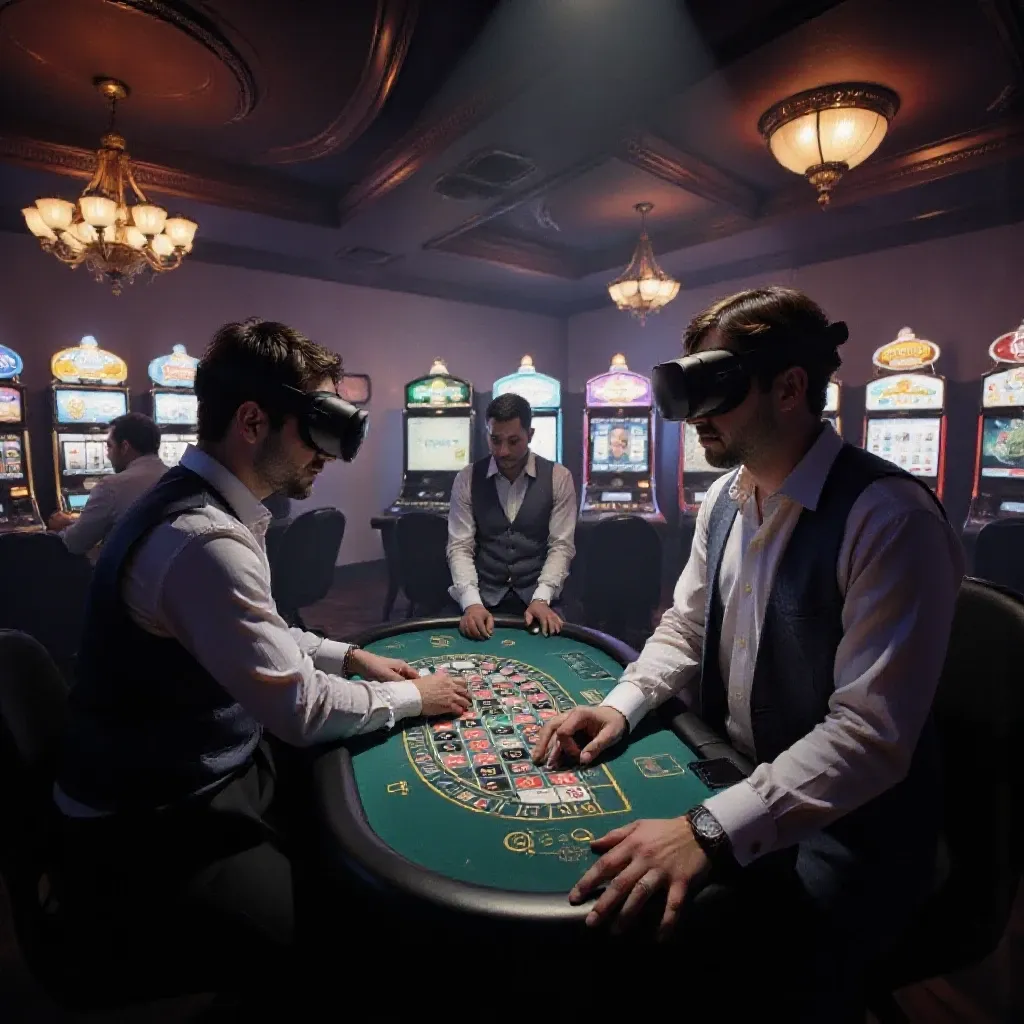
VR’s Potential Impact on Online Gambling: Player Perspective
Virtual Reality (VR) is poised to revolutionize the online gambling landscape, offering players an unprecedented level of immersion and engagement. Forget staring at a screen; imagine stepping into a vibrant, bustling casino from the comfort of your own home. The potential benefits of VR gambling extend far beyond simple convenience, promising a more realistic, social, and personalized gaming experience.
The allure of VR gambling lies in its ability to replicate the atmosphere of a brick-and-mortar casino. Picture yourself sitting at a high-stakes poker table, the felt looking and feeling real, the chips clattering as they’re pushed into the pot. You can observe your opponents’ tells, engage in banter, and truly feel the tension of the game. Blackjack becomes more exciting as you virtually reach out to hit or stand, interacting with a dealer who responds to your every move. Even slots can be elevated, with dazzling visual effects and immersive soundscapes that heighten the thrill of the spin—imagine you’re really pulling the lever!
Beyond realism, VR gambling fosters social interaction. Players can connect with friends or meet new people from around the globe, creating a sense of community that is often lacking in traditional online gambling. Imagine celebrating a big win with virtual high-fives or commiserating over a bad beat with fellow players at the bar. Furthermore, VR allows for personalized gaming experiences tailored to individual preferences, with customizable avatars, environments, and game options.
VR’s Potential Impact on Online Gambling: Casino Perspective
Virtual Reality (VR) is poised to revolutionize the online gambling landscape, offering significant benefits to casinos that embrace this cutting-edge technology. Beyond simply replicating traditional casino games in a digital environment, VR presents opportunities for enhanced customer loyalty and entirely new revenue streams.
One of the most compelling VR gambling casino benefits is the immersive experience it provides. Players are no longer passively clicking buttons; they’re virtually transported to a vibrant casino floor, complete with realistic sights, sounds, and interactions. This sense of presence fosters a deeper connection with the games and the casino brand itself, leading to enhanced customer loyalty. The ability to interact with other players in a shared virtual space further amplifies the social aspect of gambling, making it a more engaging and entertaining experience than traditional online platforms can offer.
VR also unlocks new revenue streams for casinos through innovative features and experiences. Imagine themed casino nights that transport players to different cultures and countries, all within the comfort of their own homes. VR data analysis can provide casinos with invaluable insights into player behavior, allowing them to personalize offers and tailor the gaming experience to individual preferences. Tournaments with friends, personalized avatars, and exclusive VR-only games are just a few examples of how casinos can leverage VR to attract new players and keep existing ones coming back for more. By embracing casino innovations through VR, casinos can redefine the online gambling experience and secure a competitive edge in the evolving digital landscape.
Challenges and Obstacles to VR Adoption
While the promise of VR gambling is enticing, several significant hurdles stand in the way of its widespread acceptance. Overcoming these challenges is crucial for VR gambling to transition from a niche novelty to a mainstream form of entertainment.
One of the most prominent VR gambling challenges is the cost of entry. High-quality VR headsets and compatible equipment can be a significant investment, putting them out of reach for the average gambler. Affordability is key to mass adoption, and until the price point becomes more accessible, VR gambling will likely remain a luxury experience.
Beyond cost, VR technology barriers exist in terms of user comfort and user-friendliness. Current VR headsets can be bulky and uncomfortable for extended use, potentially leading to motion sickness or ‘VR sickness’ in some individuals. The development of lighter, more ergonomic designs is essential for creating a more pleasant and immersive experience.
Technical limitations also pose a challenge. Creating seamless and realistic VR gambling environments requires significant computing power and advanced software development. Latency issues and glitches can disrupt the illusion and detract from the overall experience. Continuous improvements in VR development and infrastructure are needed to address these VR technology barriers and deliver a truly immersive product.
Finally, user adoption is not guaranteed. Some individuals may be hesitant to embrace VR technology due to concerns about privacy, security, or simply a preference for traditional gambling methods. Education and awareness campaigns may be needed to address these concerns and promote the benefits of VR gambling.

The Regulatory Landscape
The surge in online gambling has already prompted a complex web of regulations worldwide, and the emergence of VR gambling adds another layer of complexity. Current online gambling regulations focus on ensuring fairness, preventing fraud, and protecting vulnerable individuals. However, these regulations may not be fully equipped to handle the unique aspects of VR environments.
Regulators face the challenge of adapting existing frameworks to accommodate VR technology. Questions arise about how to ensure fair gaming practices within immersive, interactive VR casinos. Standard auditing procedures might need to evolve to address the unique features of VR platforms. Licensing for VR casinos will also need careful consideration, ensuring operators meet stringent requirements for security and responsible gambling.
International gambling laws further complicate the picture. VR gambling transcends geographical boundaries, meaning regulations will likely vary significantly from country to country. This creates potential challenges for both operators and regulators, demanding international cooperation to establish consistent standards and prevent regulatory arbitrage. Compliance will be key, requiring VR gambling operators to stay informed about evolving legal landscapes and adjust their practices accordingly.
The Future of Responsible Gambling in VR
Virtual Reality (VR) is poised to revolutionize various sectors, and gambling is no exception. However, the immersive nature of VR environments presents unique challenges regarding responsible gambling. The heightened sense of presence and engagement can intensify the risks of addiction, making robust responsible gambling measures crucial.
Combating VR gambling addiction requires a multi-faceted approach. Implementing tools that allow users to set stringent time and spending limits is paramount. Self-exclusion programs, easily accessible within the VR environment, are also vital. These programs should offer seamless integration across different VR gambling platforms.
VR technology itself can be leveraged to promote responsible gambling. Real-time feedback mechanisms, displaying spending and time spent, can help players stay informed. Automated reminders to take breaks can interrupt prolonged sessions. Pop-up messages with personalized responsible gambling tips can be strategically delivered during gameplay.
Developing effective responsible gambling practices for VR demands industry collaboration. Game developers, regulators, and responsible gambling organizations must work together to establish guidelines and standards. Sharing research and data on VR gambling behavior is critical for creating evidence-based strategies that protect vulnerable players.
Future Predictions: The Next 5-10 Years of VR Gambling
Gazing into the crystal ball of VR gambling, several exciting possibilities emerge for the next 5-10 years. Expect VR casinos to become significantly more realistic and immersive, blurring the line between virtual and physical environments. New game types beyond traditional casino fare will likely arise, incorporating elements of skill-based gaming and interactive narratives.Imagine poker tournaments where you can read your opponents’ virtual tells with advanced AI or roulette games set on fantastical landscapes. The affordability and accessibility of VR headsets are also set to improve, potentially making VR gambling a mainstream form of entertainment.
Moreover, expect a tighter integration of AI and other emerging technologies. AI could personalize the gambling experience, offering tailored game recommendations and even acting as virtual dealers or opponents. The future of VR gambling is not just about replicating the casino experience; it’s about creating entirely new forms of entertainment that are engaging.
Conclusion
In summary, VR is poised to redefine the landscape of online gambling, offering unparalleled immersion and realism. The integration of VR is not just a technological upgrade; it’s a fundamental shift in how people experience online casinos. As VR technology continues to evolve, its influence on the gambling industry will only expand. Stay informed about these VR trends to fully appreciate the coming transformation. The future is now.